
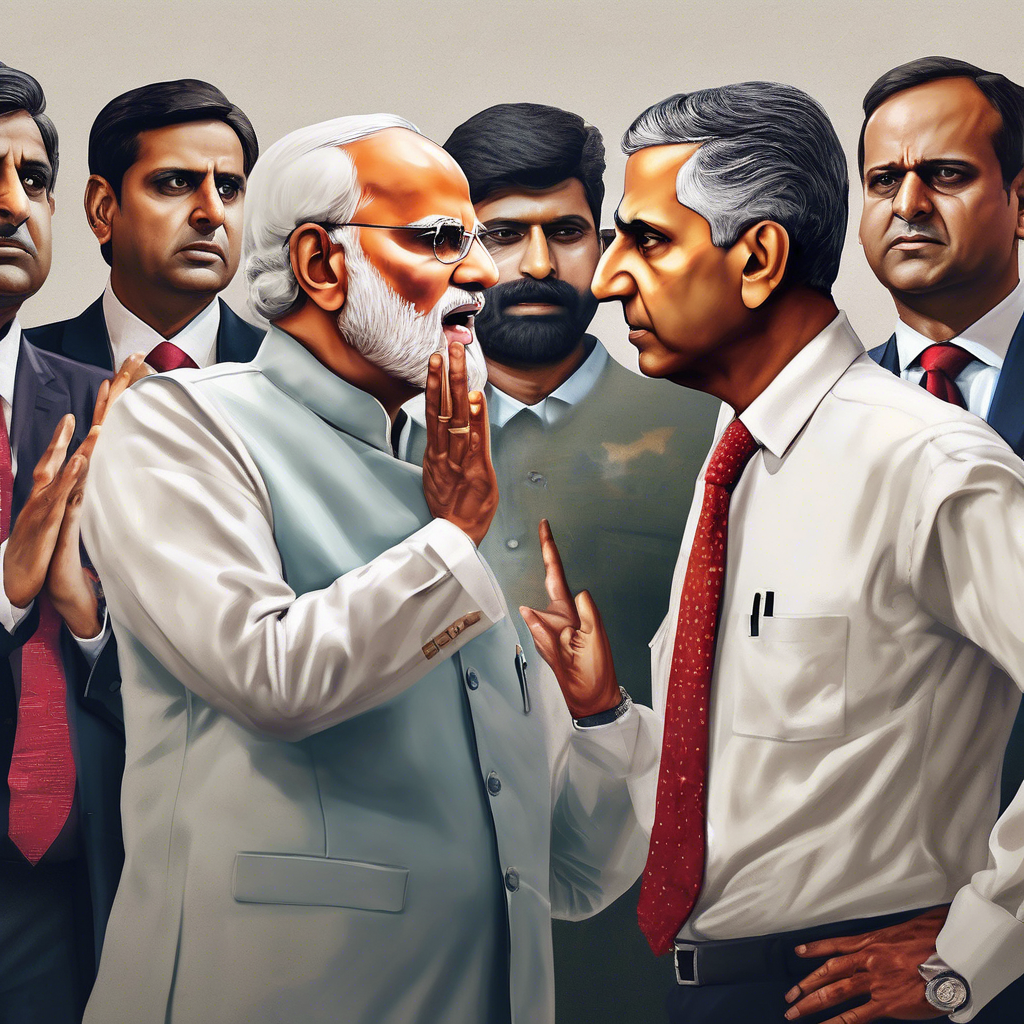
India’s Diplomatic Ambitions Tested as Trump Pushes for Deal on Kashmir
Amid the intricate web of international diplomacy, India finds itself at a pivotal crossroads, balancing its aspirations as a regional power while navigating the complexities of the Kashmir issue. This geopolitical hotbed has once again come under the spotlight as former President Donald Trump reignites discussions on a potential deal that could reshape the region’s future. 🌍
India’s ambition to solidify its status as a global diplomatic force is being tested as it contends with external influences on Kashmir, a region that has historically been a flashpoint between India and Pakistan. President Trump’s intervention, which some view as an attempt to broker peace, raises questions about sovereignty and the role of external mediation in an issue deeply rooted in historical and cultural contexts.
The Historical Context of Kashmir
Understanding Kashmir’s significance requires a glance back at the subcontinent’s partition in 1947, when the princely state of Jammu and Kashmir became a contested territory between India and Pakistan. The ensuing decades have seen multiple conflicts and ongoing strife, with both nations laying claim to the region. The area is not only strategically significant but also culturally and symbolically vital to both countries.
Trump’s Diplomatic Overtures
During his tenure, President Trump expressed a willingness to mediate between the two nuclear-armed neighbors, suggesting that the U.S. could play a role in facilitating dialogue. His comments, often described as bold and unorthodox, were met with a mixture of skepticism and cautious optimism. Critics argue that U.S. intervention could complicate the already delicate dynamics, while others see it as a potential catalyst for peace. 🕊️
India’s Diplomatic Calculus
For India, engaging in dialogue under external pressure presents a series of diplomatic challenges. New Delhi has consistently maintained that any discussions with Pakistan must be bilateral, without third-party involvement. As Prime Minister Narendra Modi’s government navigates these waters, the stakes are high, involving national pride, regional stability, and international relations.
“We believe in resolving issues bilaterally, and any external interference is unwelcome,” stated an Indian foreign ministry official, emphasizing India’s long-held stance on the matter.
Regional Implications and Global Dynamics
The Kashmir issue is more than a bilateral dispute; it has implications for regional security, economic cooperation, and the broader geopolitical landscape. While Trump’s push for a deal may have waned with his departure from office, the echoes of his initiative continue to influence diplomatic dialogues. The region remains a focal point for major powers, each with vested interests in its outcome. 🔍
Looking Ahead: A Path to Resolution?
As India treads carefully, focusing on its diplomatic ambitions and regional leadership, the path to resolving the Kashmir issue remains fraught with complexities. A sustainable solution will require addressing the root causes of tension, respecting sovereignty, and fostering trust between the nations involved.
India’s ability to navigate these diplomatic challenges will not only shape the future of Kashmir but also define its role on the world stage. The intricate dance of diplomacy, regional power dynamics, and international influence continues to unfold in this pivotal chapter of history. 🌐