
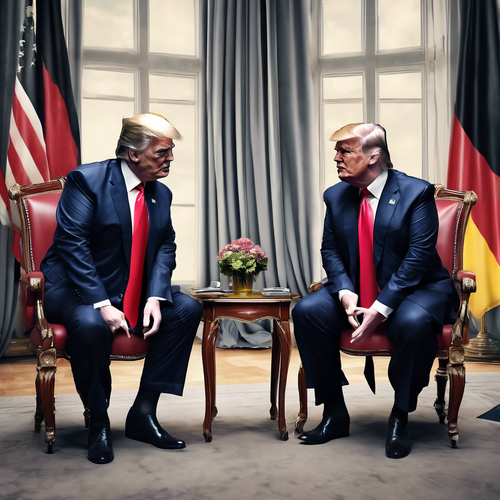
Trump Meets With German Leader: Key Insights and Implications
In a significant diplomatic engagement, former President Donald Trump met with German Chancellor Olaf Scholz to discuss crucial topics ranging from trade policies to climate change. This high-profile meeting, held in [Location] on [Date], exemplified the ongoing dialogue between the United States and Germany amid evolving global challenges. 🌍
Trade Talks: A Focus on Economic Cooperation
One of the primary objectives of the meeting was to address trade relations between the two nations. Trump emphasized the importance of fostering a mutually beneficial economic partnership, highlighting concerns over tariffs and trade balances. “We need to ensure that American workers are prioritized, and that our trade agreements reflect a fair playing field,” he stated during a press briefing following their discussions.
Scholz, in response, acknowledged the significance of strong U.S.-German trade ties and expressed a commitment to enhancing cooperation, particularly in sectors like technology and renewable energy. “We are at a pivotal moment to drive innovation and create jobs in both countries,” he remarked. 📈
Climate Policy: Aligning Goals
The conversation also ventured into climate policy, an area where the two leaders share common interests despite differing approaches. Trump reiterated his focus on energy independence, advocating for a balanced approach to transitioning to renewable sources while safeguarding American jobs. He stressed, “We can be stewards of the environment without compromising our energy security.” 🌱
Chancellor Scholz emphasized Germany’s commitment to ambitious climate targets, reflecting the European stance on aggressive carbon reduction. “Climate change is a global challenge that requires collective action, and the U.S. has a key role to play,” he responded, underscoring the significance of collaborative efforts in combating this crisis.
Global Security: A Shared Agenda
Another critical aspect of their discussions centered on international security, particularly in light of recent geopolitical tensions. Both leaders recognized the necessity for a strong transatlantic alliance to address emerging threats, including cyber security and the geopolitical ramifications of Russia’s actions in Ukraine.
“A united front is essential in navigating the complexities of today’s global landscape,” Trump asserted, while Scholz concurred, “We must ensure that our defense commitments are met and that we stand together against any form of aggression.” 🔒
Public and Political Reactions
The meeting garnered considerable media attention and prompted varied reactions from political analysts and constituents alike. Supporters of Trump viewed the dialogue as a constructive step towards revitalizing U.S.-German relations, while critics raised concerns over his previous withdrawal from international agreements during his presidency, questioning the reliability of future commitments.
Political analysts noted that this meeting could signal a renewed focus on foreign diplomacy as Trump contemplates a potential return to the presidential race in 2024. “Engagement with key European allies is vital for any frontrunner’s strategy moving forward,” one commentator stated. 🗳️
Looking Ahead: Implications for the Future
The ramifications of this meeting extend beyond immediate policy discussions. As both leaders navigate the intricacies of their respective political landscapes, the outcome of their dialogue could influence broader diplomatic strategies between the U.S. and Europe. The potential for collaboration in key areas remains robust, yet the challenges of reconciling differing approaches will require ongoing dialogue and commitment.
As the world watches closely, this encounter represents not only a moment of engagement but also a pivotal opportunity to shape the future of transatlantic relations. The stakes are high, and the needs of both nations will guide their paths forward. 🌐