
“`html
In a Nightmare: India Braces for Big Layoffs as Trump’s Tariffs Bite 🛠️😟
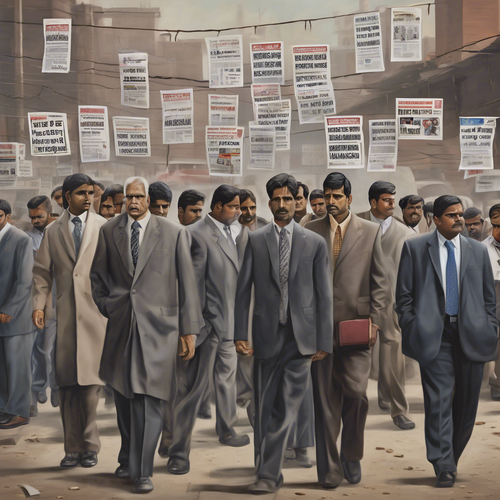
“In a nightmare” is a phrase that resonates deeper than mere words; it’s a vivid portrayal of anxiety transformed into reality. For India’s workforce, this nightmare feels almost prophetic as the repercussions of President Trump’s aggressive tariff measures are beginning to unfold. Labor market analysts brace for impact, anticipating a potential wave of layoffs that could turn the vibrant hustle of Indian manufacturing into a cacophony of uncertainty and despair.
The specter of layoffs looms like a shadow over the country’s burgeoning economies, where once-thriving factories could soon feel eerily silent. As India rides the tumultuous waves of globalization, the sudden shifts in trade policy from the U.S., which some might almost praise as “sharp business acumen,” appear instead like the closing act of a tragic comedy on the world stage.
The Irony of Tariffs: A Double-Edged Sword
Ironically, tariffs—which are often touted as a tool for protecting local businesses—might very well become the pitfall for India’s labor market. Further complicating this economic quagmire, India’s export-dependent sectors now find themselves caught between the hammer of rising production costs and the anvil of dwindling foreign demand. Technology and automotive industries, previously heralded as the bulwarks of India’s economic resurgence, are now teetering on the brink of layoffs.
Data from the Confederation of Indian Industry estimates that upwards of 1 million jobs could be at risk as these tariffs start to bite deeper into production margins. It’s a cruel twist of fate—one that seems to mock the hopes of both employees and employers.
A Tension-filled Tapestry of Economic Reality
Amidst the noise of political discourse, the stories of those on the ground paint a poignant picture. Anshul, a worker in a textile plant in Tirupur, reflects on the changes. “It feels as if we’re all dancing on a tightrope,” he confesses. “One misstep, and we could find ourselves lost to the winds of economic policy.” His sentiments resonate with workers from various sectors, from textiles to steel, trapping them in a paradox of dependency on foreign markets while yearning for local stability.
The Fragility of Job Security ⚖️
Job security, once a pillar of the Indian middle class, is now as fragile as a house of cards. The striking antithesis between the promise of prosperity and the threat of layoffs creates a tension that is palpable. Behind every statistic lies a unique human story: families waiting anxiously for news, dreams deferred, futures uncertain. Sarita, a single mother working in electronic assembly, encapsulates this with poignant clarity: “Every day feels like a looming question—will I be able to feed my children tomorrow?”
Globalization’s Gift and Its Curse
The threads of globalization, which once wove India into the fabric of international trade, are now fraying. As countries enact protectionist measures, the paradox becomes starkly clear; globalization can simultaneously foster growth and sow seeds of anxiety. The balance between exporting goods and protecting local interests is no simple feat. Will India pivot towards self-sufficiency, or will it remain entangled in the web of foreign dependency? The road ahead appears laden with challenges.
Economist Perspectives: Balls in the Air 💼
Experts are divided in their predictions. Some believe that Indian industries can adapt and innovate to mitigate the fallout from tariffs, much like how nature adapts through evolution. Others warn of a potential downturn, reminiscent of past economic recessions, citing that the very fabric of economic stability may unravel when we least expect it. The theater of politics may play on, but beneath the surface, tangible fears simmer amongst the populace.
In the midst of all this, the potential effectiveness of governmental interventions remains murky. Encouragement of domestic production, incentives for manufacturers to scale down imports, or a fierce push for innovation may all be viable paths forward. Each carries its own risks and rewards, akin to picking up a double-edged sword—one might inflict damage just as easily as it might protect.
Facing the Storm: Resilience in Adversity
For now, as swirling winds of change sweep across India, the question remains: will resilience triumph over adversity? If history has taught us anything, it’s that nations, like individuals, often emerge stronger from the storms they weather. The ability of India to adapt and reinvent itself may very well be its greatest asset in this precarious moment.
In a world where uncertainty reigns, the collective breath of millions holds the promise of resilience. Indian workers, once confident in their strides, now find themselves navigating a landscape of shifting definitions of security and prosperity. And while the specter of layoffs looms ominously on the horizon, it is the indomitable human spirit—much like a phoenix—that rises ever so valiantly, seemingly against all odds.
“`