
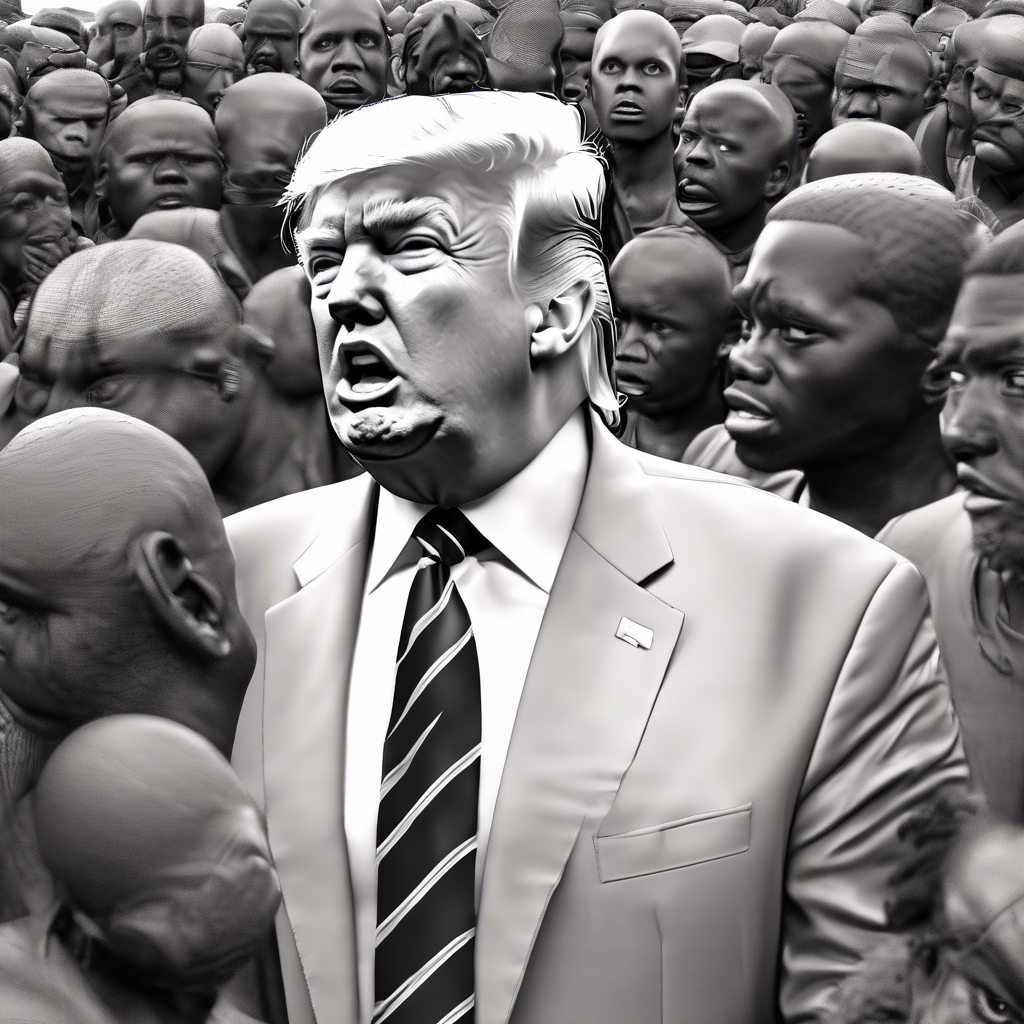
Donald Trump Faces Criticism After Taking in White South African Refugees
In a move that has sparked international debate, former President Donald Trump has come under fire for his administration’s policy of accepting white South African refugees. The decision, which Trump defended as a humanitarian gesture, has been met with widespread criticism and has reignited discussions on racial dynamics, immigration policies, and international relations. 🌍
Understanding the Controversy
The Trump administration’s decision to prioritize white South African farmers for refugee status drew immediate backlash. Critics argue that this policy reflects a broader narrative of racial preference, especially given the administration’s historically restrictive stance on immigration. 🌱
Proponents of the policy claim it addresses the alleged discrimination and violence faced by white farmers in South Africa. They point to reports of land expropriation and violent attacks as justification for the policy. “These are people who need help,” Trump said in a statement, defending the move as a response to what he described as a “humanitarian crisis.” 💼
Political and Social Implications
The decision has drawn a sharp divide among political leaders and commentators. Some view it as an extension of Trump’s “America First” doctrine, selectively applied to certain groups. The policy has been condemned by civil rights organizations, which argue that it sets a dangerous precedent for immigration based on race. ⚖️
“This is not about humanitarianism; it’s about pandering to a subset of Trump’s political base,” said a spokesperson for a prominent civil rights group. “It underscores a selective empathy that marginalizes other deserving refugees based on racial criteria.”
Historical Context and Comparisons
The controversy surrounding white South African refugees isn’t new. Similar situations have arisen in the past where displacement and violence against minority groups have prompted international responses. The Trump administration’s approach, however, is seen as particularly contentious given the broader context of its immigration policies. 📜
Historically, U.S. immigration policy has fluctuated between openness and restriction. Critics highlight the administration’s restrictive stance on asylum seekers from Central America and the Middle East, contrasting it with the acceptance of South African farmers. This, they argue, highlights a double standard rooted in racial preference. 🗽
International Reactions
South Africa’s government has criticized the portrayal of the situation, arguing that it undermines their efforts to address land reform and racial inequalities post-apartheid. “The narrative being pushed is misleading and detrimental to our nation’s progress,” said a South African official. 🇿🇦
International human rights organizations have also voiced concerns, calling for a more equitable approach to addressing global refugee crises. They stress the importance of policies that reflect humanitarian needs over political agendas. 🕊️
The Road Ahead
The debate over Trump’s refugee policy is likely to continue, serving as a litmus test for future immigration policies and international relations. It raises critical questions about the criteria used to determine refugee status and the values driving these decisions. As the world grapples with complex migration challenges, balanced and non-discriminatory policies remain crucial. 🌎
As lawmakers and advocacy groups continue to tackle these issues, the impact of Trump’s decision will undoubtedly resonate in discussions about immigration and humanitarian aid, shaping the narrative for years to come. 🧭